Hello all,
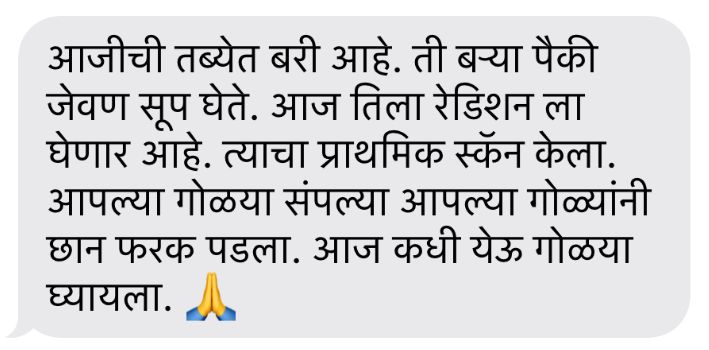
Hope you all are doing well. Today, I want to share a powerful and inspiring story of a cancer cervix patient who was admitted to the ICU due to critically low platelet count, and how homeopathy became a beacon of hope in her recovery. After starting homeopathic treatment, not only did she recover enough to come out of the ICU, but her treatment is now continuing alongside radiotherapy — showing the scope and supportive role that homeopathy can play, even in intensive care scenarios.
Understanding the ICU Environment
The Intensive Care Unit (ICU) is a highly monitored and controlled space designed to treat patients with life-threatening conditions. Treatments typically include high-end medications, invasive monitoring, and advanced life-support systems. It is often believed that such cases are strictly a domain of modern medicine, with little or no room for alternative treatments like homeopathy.
However, integrative approaches — where homeopathy complements conventional medical treatment — are gradually gaining attention due to the subtle but effective role of energy-based medicine in the healing process, even for severely ill patients.
The Case: Cancer of Cervix in ICU
Our patient, a middle-aged woman diagnosed with carcinoma of the cervix, had been undergoing conventional cancer treatment. Unfortunately, during this process, she experienced a drastic fall in her platelet count, which led to her being admitted to the ICU. Low platelets in cancer patients can result from the disease itself, chemotherapy, or bone marrow suppression, leading to risks of bleeding, infection, and multiple organ failure.
The family was desperate, and at this critical stage, they turned to homeopathy as a complementary support.
Homeopathic medicines were selected carefully on the basis of her individual symptoms, mental state, disease stage, and general vitality. Within a few days of initiating homeopathy, her platelet count began to improve, and she showed signs of clinical stability. She was soon discharged from the ICU, and today, her radiotherapy continues along with homeopathic treatment, offering a better quality of life and strengthening her body’s defense system.
How Does Homeopathy Help in ICU Cases?
Homeopathy works on the principle of “like cures like” and focuses on stimulating the body’s innate healing ability. It is individualized, gentle, and free from chemical side effects. In ICU settings, homeopathy doesn’t replace conventional medicine but complements it in several ways:
1. Immune Modulation
Homeopathic remedies can help boost the immune system, aiding faster recovery from infections, sepsis, or post-operative complications.
2. Emotional and Mental Support
Patients in ICU often suffer from delirium, anxiety, and emotional trauma. Remedies like Aconitum napellus, Arsenicum album, or Ignatia have been found useful in calming such distress.
3. Recovery from Side Effects
In critical cases like cancer, chemotherapy and radiotherapy often cause nausea, hair loss, weakness, and blood abnormalities. Homeopathy can offer gentle relief from these side effects.
4. Pain Management
Remedies like Belladonna, Bryonia, and Hypericum can aid in managing pain, reducing the dependency on heavy analgesics.
5. Hemorrhagic Conditions
In cases of bleeding or low platelets, remedies like Crotalus horridus, Phosphorus, China officinalis, and Hamamelis may assist in improving the blood profile and capillary strength.
Scientific Observations and Experience
There are limited large-scale clinical trials in this field, but several documented case studies, hospital records, and clinical observations by experienced homeopaths worldwide highlight its potential. Hospitals in countries like India, Germany, Switzerland, and Brazil have reported positive outcomes when homeopathy is included as part of an integrative care system.
Even WHO has encouraged further research into traditional systems of medicine, including homeopathy, in hospital setups.
Limitations and Ethical Considerations
It is crucial to understand that homeopathy should never delay or replace life-saving interventions. In the ICU, patient safety is the top priority, and the role of homeopathy should be supportive and ethical. Interdisciplinary coordination between allopathic doctors and homeopaths can create a collaborative environment focused on patient welfare.
The Future: Bridging the Gap
As more and more patients look for holistic and non-invasive solutions, the scope of homeopathy in critical care settings is set to grow. Hospitals can consider pilot programs and clinical integration of homeopathy to evaluate its benefits.
Education and awareness among medical professionals and families can also help overcome skepticism. Real-life experiences like the one shared above create hope and show that homeopathy, when used wisely and responsibly, can contribute to recovery even in the most delicate medical situations.
Final Thoughts
The journey of our cervical cancer patient — from ICU to stabilized recovery — is not just a medical case; it is a testimony to the strength of integrative medicine. With ongoing radiotherapy and continuous homeopathic care, she is not just surviving but moving toward a better life.
Let us remain open to the possibilities beyond limitations, and bring together the best of all worlds to help our patients heal — body, mind, and soul.
Patients’ relatives Feedback